

Mumbai is unlike any other denim market in India[cite: 1]. The city combines a mass-market consumer base in its suburbs, a premium-aspirational base in South Mumbai and the Western belt, a serious export trade centred around Bhiwandi and SEEPZ, and a legacy wholesale cluster in Ulhasnagar that has shaped national denim pricing for three decades[cite: 1]. If you source for a Mumbai store, you are operating inside the most layered denim ecosystem in the country[cite: 1].
That layering is both an advantage and a trap[cite: 1]. Mumbai gives you more sourcing options than any other city, but each option carries different economics, lead times, and quality variance[cite: 1]. A wrong choice shows up in your margins within one season[cite: 1].
This guide is written for the Mumbai or wider Maharashtra retailer who wants to cut through the layers[cite: 1]. We cover how the wholesale ecosystem is actually structured, where real factory-direct supply fits in, what pricing to expect in 2026, and how to build a sourcing chain that holds up through monsoon logistics and festive-season demand spikes[cite: 1].
Let us go through it in the order the decisions will actually matter[cite: 1].
Mapping Mumbai’s Wholesale Denim Markets
Mumbai’s wholesale denim trade is geographically dispersed in a way Delhi or Bangalore is not[cite: 1]. Each cluster has its own character and ideal buyer profile[cite: 1].
Ulhasnagar: The Volume Capital of Western India
The ulhasnagar jeans wholesale market is arguably the largest denim distribution cluster west of Delhi[cite: 1]. The lanes around Ulhasnagar 3 and 4 move serious volume at some of the lowest per-piece rates in India[cite: 1]. Historically, Ulhasnagar built its reputation on branded surplus and smart imitations, and that trade continues today alongside a growing original-manufacturing segment[cite: 1].
For budget-focused retailers servicing Tier-2 Maharashtra towns, Ulhasnagar remains the default[cite: 1]. For boutique or mall-based retail, the price advantage can disappear once quality variance is factored in[cite: 1].
Dadar: The Central Mumbai Hub
The dadar jeans wholesale market mumbai cluster around Ranade Road and the station area is smaller than Ulhasnagar but better located for South and Central Mumbai retailers[cite: 1]. A dadar wholesale jeans supplier typically caters to boutique and multi-brand outlets in Lower Parel, Prabhadevi, and the Western suburbs[cite: 1]. The product mix skews toward mid-tier and fast-fashion denim[cite: 1].
Crawford Market and Mangaldas Market
These older South Mumbai clusters handle a mixed garment trade, including denim in smaller quantities[cite: 1]. They are useful for emergency restocks and specialised fabric sourcing but are not primary wholesale denim destinations[cite: 1].
Bhiwandi
Bhiwandi has grown into a serious warehousing and distribution base[cite: 1]. Many Mumbai-registered wholesalers physically stock inventory in Bhiwandi godowns and ship outward from there[cite: 1]. If you buy from a Mumbai distributor, your cartons likely originate from a Bhiwandi facility[cite: 1].
Thane, Vashi, and Panvel
These extended-Mumbai markets have grown into independent wholesale points for the Thane and Navi Mumbai retail belt[cite: 1]. They mostly stock from Ulhasnagar and Gujarat sources rather than local manufacturing[cite: 1].
Featured Women’s Denim for Mumbai Retailers
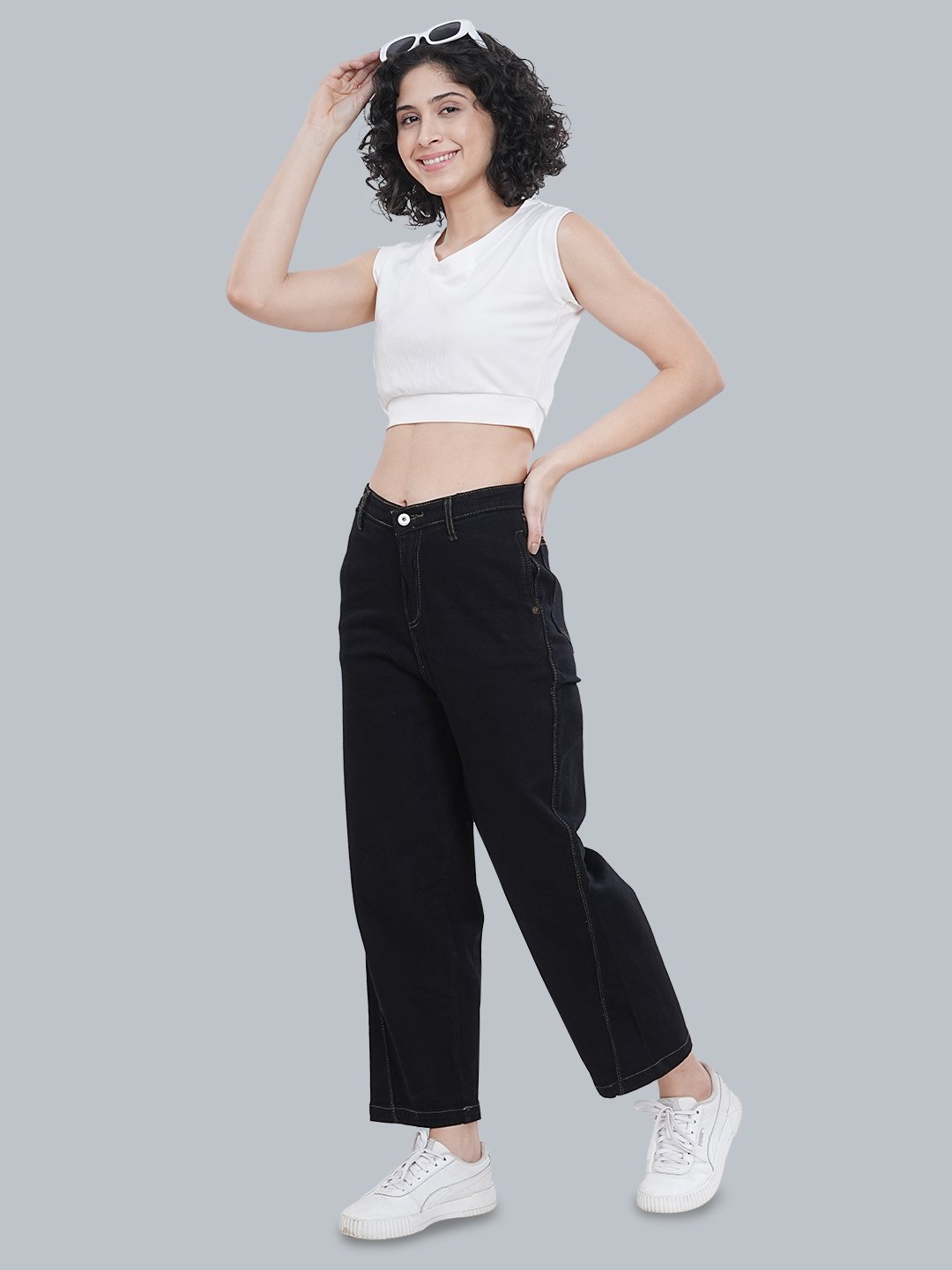
Carrot Fit Ankle Length Jeans for Women
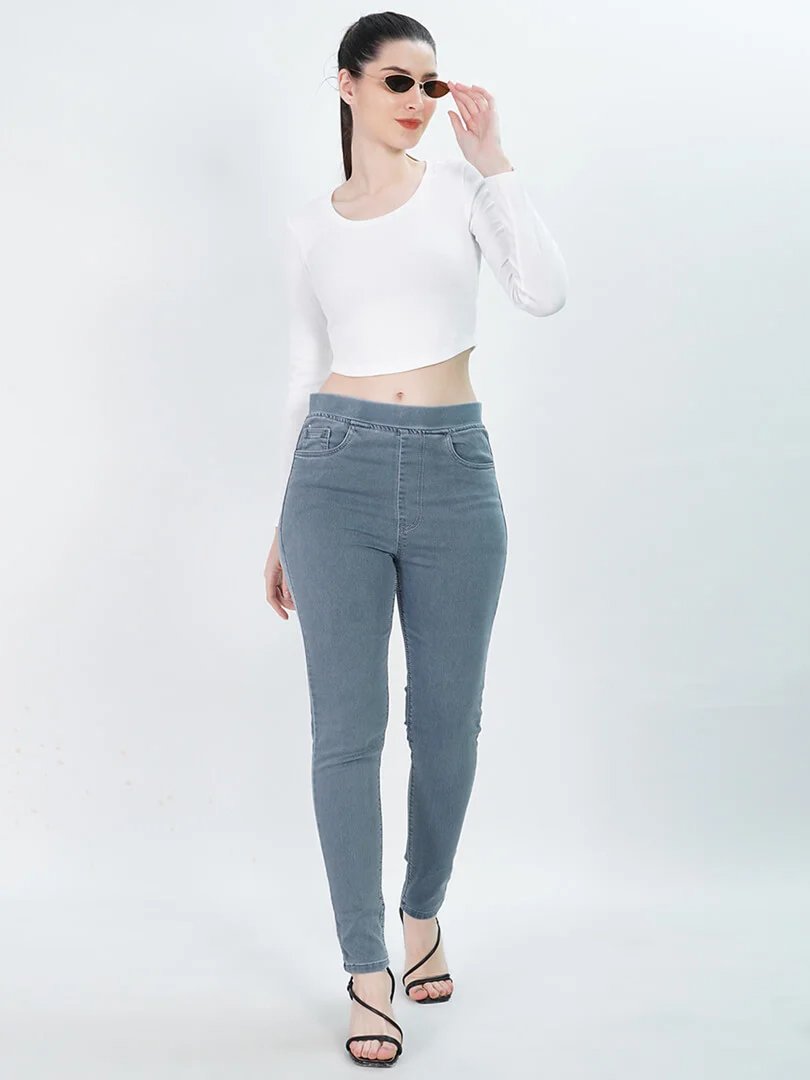
Fix Elastic Skinny Jeggings for Women
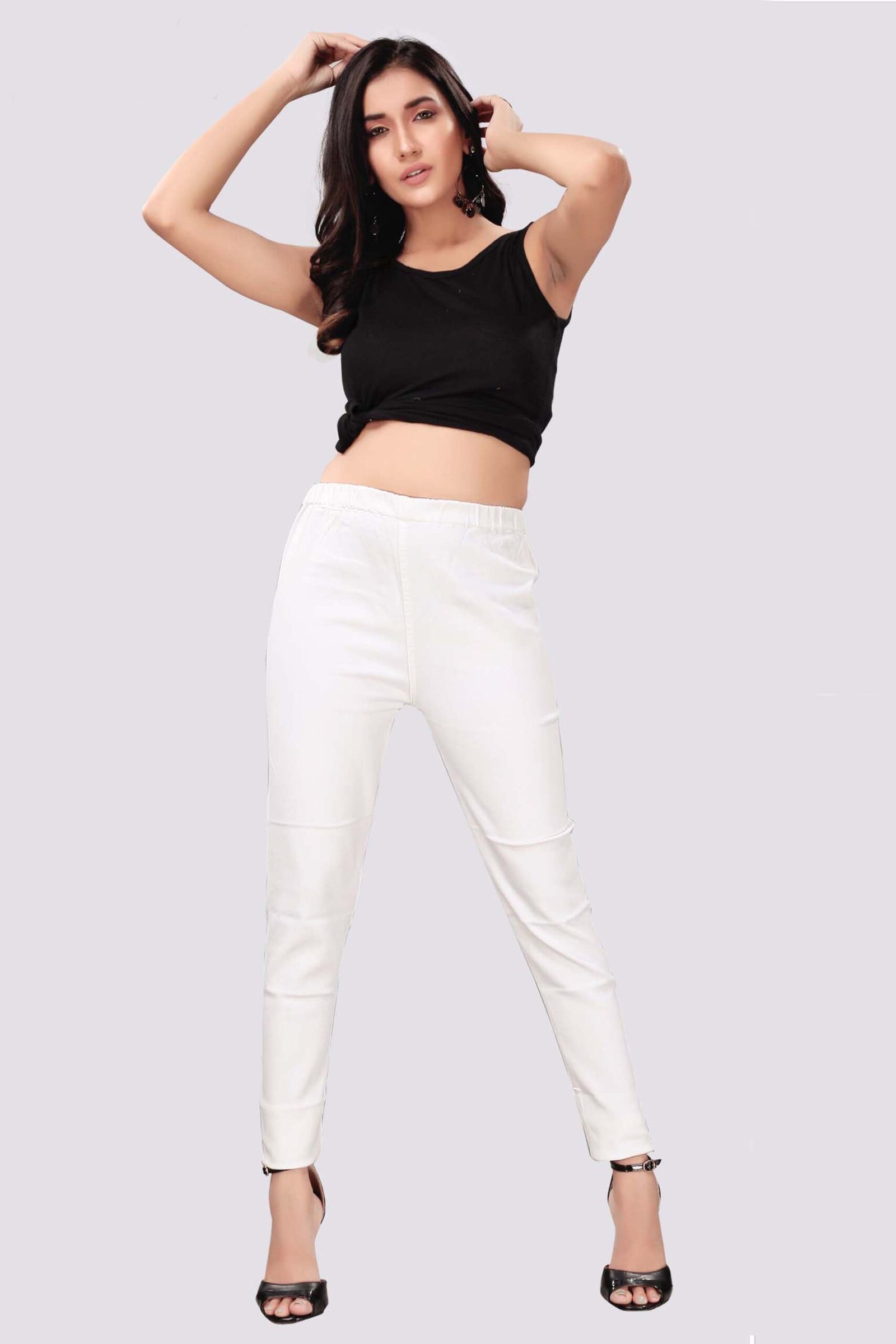
Faded Denim Jeggings for Women
Who Actually Supplies Mumbai’s Denim?
Here is the truth behind the wholesale market signage: the vast majority of denim sold through Ulhasnagar, Dadar, and the suburban distributor network is produced in Gujarat[cite: 1]. The physical trade happens in Mumbai, but the manufacturing chain starts 500 kilometres north[cite: 1].
The Three-Layer Reality
Most Jeans Suppliers in Mumbai operate in one of three positions:
- Direct resellers who buy finished stock from Gujarat factories and resell with a 15 to 25 percent margin[cite: 1]
- Finishing-and-labelling houses who import semi-finished denim from Gujarat and complete washing, tagging, and packing in Mumbai[cite: 1]
- Original manufacturers who stitch locally, usually at higher cost but with faster turnaround[cite: 1]
The first category dominates by volume[cite: 1]. The third category is small but important for retailers who need quick-turn custom work[cite: 1].
What This Means for Your Sourcing
If you source from Mumbai distributors, you are almost certainly paying a layer of margin that could be avoided by going direct to the Gujarat source[cite: 1]. For small quantities, that margin is the cost of convenience[cite: 1]. For bulk orders above 500 pieces, the arithmetic flips sharply in favour of factory-direct[cite: 1].
It is also worth understanding the broader maharashtra jeans manufacturer ecosystem beyond Mumbai city limits, which includes smaller stitching units in Pune, Nashik, and Kolhapur that service specific product niches[cite: 1].
Why Mumbai Retailers Increasingly Buy Direct from Ahmedabad
The shift is visible across the Mumbai retail scene[cite: 1]. Boutique chains in Bandra, growing D2C brands in Andheri, and mid-tier distributors across Thane are quietly moving their core orders from local wholesalers to direct Gujarat factory supply[cite: 1]. The economics explain why[cite: 1].
The Cost Case
For a standard mid-tier men’s denim piece, local Mumbai wholesale pricing in 2026 runs 450 to 600 INR[cite: 1]. The same specification bought through Ahmedabad jeans factory direct supply to Mumbai typically lands at 380 to 500 INR[cite: 1]. On a 1000-piece order, that is 70,000 to 100,000 INR of margin that stays with the retailer instead of the distributor[cite: 1].
Beyond Cost
Direct factory supply also gives you:
- Written fabric specifications instead of verbal assurances[cite: 1]
- First access to new designs before they reach secondary markets[cite: 1]
- Custom wash, finishing, and labelling options[cite: 1]
- Fewer quality variance incidents because you deal with the source[cite: 1]
- Documented GST and e-way bill handling without intermediary complications[cite: 1]
The trade-off is lead time[cite: 1]. Custom orders need 15 to 25 days, and ready stock arrives in 3 to 5 days by road[cite: 1]. For retailers planning inventory properly, this delay is manageable[cite: 1]. For those who buy reactively each month, local wholesalers remain the fallback[cite: 1].
Most serious buyers in Mumbai end up with a blended approach: 70 to 80 percent of inventory from Gujarat direct, 20 to 30 percent from local wholesalers for emergency top-ups and specialised items[cite: 1].
How to Evaluate a Wholesale Jeans Supplier in Mumbai
Mumbai has more wholesale denim suppliers than any Indian city[cite: 1]. That abundance makes evaluation harder, not easier[cite: 1]. Here is the due diligence checklist we would walk through before signing a serious supply relationship[cite: 1].
Business Credentials
- Verified GST registration with no cancellation history[cite: 1]
- Physical office address, not just a godown location[cite: 1]
- At least 3 years of trading history in the current form[cite: 1]
- References from two or three retailers of comparable size to yours[cite: 1]
Product Verification
- Written fabric specifications on sample tags[cite: 1]
- Consistent wash shade across pieces in the same lot[cite: 1]
- Branded zippers (YKK or named Indian equivalents, never generic)[cite: 1]
- Lockstitch density visible on inspection[cite: 1]
- Clean inner labels with wash care instructions[cite: 1]
Commercial Terms
- Published MOQ structure, not case-by-case negotiation[cite: 1]
- Transparent pricing tiers for different volumes[cite: 1]
- Clear advance and balance payment terms (not 100 percent upfront)[cite: 1]
- Documented return policy for manufacturing defects[cite: 1]
Operational Capability
- Dispatch within 48 to 72 hours for ready stock[cite: 1]
- Named transporter relationships, not casual bookings[cite: 1]
- GST invoicing and e-way bill handling in-house[cite: 1]
- Responsive customer support via WhatsApp and phone[cite: 1]
A bulk denim jeans supplier mumbai that cannot answer all these points cleanly is still working through middleman arrangements[cite: 1]. That is fine for small orders but risky for serious inventory bets[cite: 1].
Product Categories That Move in the Mumbai Market
Mumbai’s denim consumption pattern is more fragmented than any other Indian city[cite: 1]. A retailer in Bandra sells differently from one in Thane, and both differ from a Pune or Nashik store sourcing through Mumbai distribution[cite: 1]. Here is what moves and in what mix[cite: 1].
Men’s Denim
For a men jeans wholesale supplier mumbai relationship, the core SKUs in 2026 are:
- Slim-fit stretch denim in dark washes (year-round volume leader)[cite: 1]
- Tapered and jogger-cut denim for the 22 to 32 bracket[cite: 1]
- Relaxed and straight-fit for the 35-plus mall customer[cite: 1]
- Washed and distressed finishes for weekend-wear positioning[cite: 1]
Size runs typically concentrate between 30 and 38, with 32 and 34 moving fastest[cite: 1]. A solid men’s jeans wholesale catalogue should carry at least 20 active SKUs across these fits[cite: 1].
Women’s Denim
ladies jeans wholesale in mumbai activity has grown faster than men’s for the past four seasons[cite: 1]. The categories that move best:
- High-rise mom jeans and straight-leg cuts (strongest trend of 2026)[cite: 1]
- Jeggings with 4-way stretch (consistent across all segments)[cite: 1]
- Wide-leg and flare denim for boutique and mall retail[cite: 1]
- Occasion-wear denim with embellishments or washes[cite: 1]
For comprehensive stock across these categories, our women’s jeans wholesale range covers waist sizes 26 to 36 with length variations[cite: 1].
Premium Stretch Segment
A notable Mumbai-specific category is premium stretch denim, serving the city’s mall-based and corporate-shopper segment[cite: 1]. A dedicated premium stretch denim supplier mumbai relationship can carry 12 to 20 percent higher margins than standard denim, provided the quality holds up to brand-store comparison[cite: 1].
Mumbai’s Export Trade and What It Means for Domestic Buyers
Mumbai has long been one of India’s top three denim export hubs[cite: 1]. Jeans exporters in Mumbai service buyers across the Middle East, Africa, Southeast Asia, and parts of Europe[cite: 1]. For domestic retailers, this export ecosystem matters for two practical reasons[cite: 1].
Export Surplus Opportunities
Export production routinely creates surplus stock, whether through overruns, cancelled orders, or quality rejections that still meet domestic standards[cite: 1]. This surplus feeds back into the Mumbai wholesale market at significant discounts[cite: 1]. For retailers willing to inspect carefully, export surplus can deliver branded-quality denim at commodity pricing[cite: 1].
The caveat: original brand tags must be removed before domestic resale, and documentation must be clean[cite: 1]. Buy only from suppliers who handle this correctly[cite: 1].
Export-Grade Specifications Trickling Down
The quality bar set by export buyers has gradually lifted domestic production standards[cite: 1]. Fabric specifications, wash consistency, and construction quality in Mumbai-sourced denim have improved measurably over the past five years[cite: 1]. This is partly why Mumbai retailers can now compete more credibly with branded showrooms on quality perception[cite: 1].
Cross-Border Connections
Some Mumbai-based exporters also operate as domestic B2B jeans supplier in Mumbai networks, giving retailers access to export-grade production at domestic pricing[cite: 1]. This dual-channel model is particularly common in Bhiwandi and Dharavi production clusters[cite: 1].
2026 Wholesale Pricing: Delivered to Mumbai
Here is what honest direct gujarat denim wholesale in maharashtra pricing looks like in 2026, delivered to a Mumbai or extended Mumbai address[cite: 1].
| Category | Specification | Direct Factory Rate (INR) |
|---|---|---|
| Men’s basic rigid denim | 12 oz, standard wash | 340 – 410 |
| Men’s stretch denim | 11 oz with elastane, mid wash | 380 – 480 |
| Men’s premium washed | Branded zippers, heavy finishing | 460 – 580 |
| Women’s jeggings | 4-way stretch, 9 to 10 oz | 260 – 340 |
| Women’s mom and straight fit | Mid-weight, varied washes | 330 – 430 |
| Women’s flare and wide-leg | Fashion fits | 360 – 460 |
| Occasion-wear embellished | Hand finishing, trims | 420 – 550 |
| Export surplus (mixed) | Branded quality, mixed stock | 310 – 420 |
| Ulhasnagar comparable grade | Local wholesale rate | 290 – 380 |
The Ulhasnagar row is interesting[cite: 1]. Local wholesale pricing often appears competitive on the surface but once you factor in quality variance, dead stock from inconsistent sizing, and higher return rates, the effective cost is usually higher than Gujarat direct supply[cite: 1]. The ulhasnagar jeans wholesale alternative conversation has become more common in Mumbai retail circles for exactly this reason[cite: 1].
Delivery Coverage: Mumbai, MMR, and Beyond
Logistics in Mumbai is more complex than in most Indian cities[cite: 1]. Monsoon disruption, port-area congestion, and ward-level entry restrictions all affect delivery predictability[cite: 1]. A serious bulk supplier accounts for this in planning[cite: 1].
From an Ahmedabad factory source, typical road freight timelines to Mumbai Metropolitan Region addresses work out as:
- South Mumbai (Fort, Colaba, Bhuleshwar): 3 to 5 days[cite: 1]
- Central Mumbai (Dadar, Lower Parel, Prabhadevi): 3 to 5 days[cite: 1]
- Western Suburbs (Bandra to Borivali): 4 to 5 days[cite: 1]
- Thane and Mulund: 4 to 5 days[cite: 1]
- Navi Mumbai (Vashi, Belapur, Panvel): 4 to 6 days[cite: 1]
- Kalyan, Ulhasnagar, Dombivli: 4 to 6 days[cite: 1]
- Extended Maharashtra (Pune, Nashik, Nagpur): 5 to 8 days[cite: 1]
Monsoon Considerations
From June through September, build 1 to 2 days of buffer into any delivery timeline[cite: 1]. Coastal transport corridors flood intermittently, and port-area deliveries may be delayed by congestion[cite: 1].
Documentation Requirements
Every consignment should arrive with GST invoice, e-way bill, transporter builty, and a carton-level packing list[cite: 1]. Missing documentation creates serious complications in Maharashtra’s state-level checks[cite: 1].
For comparison with other regional supply models, our networks for denim manufacturer in Delhi and denim manufacturer in Noida operate on similar documentation standards[cite: 1].
Private Label and D2C Brands Running Out of Mumbai
Mumbai has quietly become India’s leading city for D2C fashion[cite: 1]. The combination of fashion-forward consumers, deep marketing infrastructure, celebrity-adjacent brand positioning, and VC capital has produced a generation of denim-first labels operating out of Andheri, Lower Parel, and BKC[cite: 1].
If you are building one, a private label jeans manufacturer shipping to mumbai relationship is probably the single highest-leverage sourcing decision you will make[cite: 1].
What Private Label Delivers for Mumbai D2C
- Branded woven labels, hangtags, and QR authenticity systems[cite: 1]
- Custom hardware (rivets, zippers, buttons) carrying your brand[cite: 1]
- Fit customisation using your own measurement grading at higher MOQs[cite: 1]
- Dedicated e-commerce poly-bag packaging[cite: 1]
- Lookbook-ready samples for marketing shoots[cite: 1]
Commercial Reality
First private label orders typically require 150 to 300 pieces per design, with repeat MOQs dropping to 100[cite: 1]. The cost premium over commodity denim runs 20 to 50 INR per piece, which the market absorbs easily given D2C pricing power[cite: 1].
Timeline Discipline
Label artwork and sample approval takes 5 to 7 days[cite: 1]. Production runs 20 to 25 days[cite: 1]. Shipping to Mumbai adds 4 to 6 days[cite: 1]. If you plan launches around Instagram marketing calendars, work backward from your campaign date with a 10-day buffer[cite: 1].
To see current styles that D2C brands are picking up, you can shop all products across the active catalogue[cite: 1].
How Mala Merchant Supports Mumbai Bulk Buyers
Mala Merchant operates as a direct Ahmedabad-origin supplier serving Mumbai, Thane, Navi Mumbai, and extended Maharashtra retailers[cite: 1]. Our clients include multi-brand stores in the suburbs, boutique chains in South and Central Mumbai, D2C brands fulfilling from Mumbai warehouses, and distributors servicing Pune, Nashik, and Nagpur from Mumbai hubs[cite: 1].
What Mumbai clients get from this relationship:
- Factory-direct pricing without the Ulhasnagar or Dadar margin stack[cite: 1]
- Catalogue of 200-plus active designs refreshed every quarter[cite: 1]
- MOQs from 100 pieces per design with mix-and-match flexibility[cite: 1]
- Private label support from the first order with transparent setup costs[cite: 1]
- End-to-end GST, e-way bill, and transporter documentation[cite: 1]
- Dispatch within 72 hours for ready stock, 20 to 25 days for custom production[cite: 1]
- Monsoon-aware logistics planning with buffer allowances built in[cite: 1]
- Dedicated account support across voice, WhatsApp, and email[cite: 1]
If you want to understand the operating philosophy behind this model, our about us section covers how the Ahmedabad-to-Mumbai supply chain is structured on our side[cite: 1].
Sourcing Mistakes Specific to Mumbai Retailers
Mumbai buyers tend to make a different set of errors than retailers in other metros[cite: 1]. The patterns are consistent enough to flag[cite: 1].
Defaulting to Ulhasnagar Without Comparing Direct Supply
Ulhasnagar prices feel competitive by habit[cite: 1]. But a side-by-side comparison with Gujarat direct pricing for comparable fabric and finish usually shows direct supply winning by 10 to 20 percent, before accounting for quality variance[cite: 1].
Underestimating Monsoon Logistics
Stock ordered in late June for July festivals often arrives late[cite: 1]. Build the monsoon buffer into your calendar explicitly rather than hoping transport will cooperate[cite: 1].
Ignoring Suburban Micro-Markets
Mumbai is not one market[cite: 1]. A Bandra customer and a Kalyan customer want very different denim[cite: 1]. Buying one catalogue mix for all your outlets is leaving sales on the table[cite: 1].
Confusing Export Surplus with Rejects
Not all export surplus is equal[cite: 1]. Some is genuine overrun from quality production[cite: 1]. Some is rejected stock with real defects[cite: 1]. Learn to tell the difference before committing to large export-surplus orders[cite: 1].
Mixing Too Many Supplier Relationships
Mumbai retailers often juggle five or six wholesalers because each specialises in something[cite: 1]. This creates invoice chaos, inconsistent quality, and weak negotiating leverage[cite: 1]. Two or three strong relationships almost always outperform six casual ones[cite: 1].
Frequently Asked Questions
What is the minimum order quantity for bulk denim delivered to Mumbai?
Factory-direct suppliers typically set MOQs between 100 and 300 pieces per design. Local Mumbai distributors with ready stock may accept smaller test orders of 24 to 50 pieces at slightly higher per-piece rates.
Is it worth sourcing from Ahmedabad instead of Ulhasnagar for a Mumbai store?
For orders above 500 pieces per cycle, yes. The cost savings of 10 to 20 percent plus more consistent quality usually justify the slightly longer lead time. For emergency buys under 100 pieces, Ulhasnagar still wins on turnaround.
Can I buy bulk jeans from Ahmedabad with Mumbai delivery and GST compliance?
Yes. Serious Gujarat factories handle GST invoicing, inter-state e-way bills, and transporter documentation routinely. The paperwork should arrive with the consignment, not after.
How do I compare quality across Ulhasnagar, Dadar, and Gujarat sources?
Buy one sample lot of 10 to 20 pieces from each source matching your target specification. Compare fabric weight, stitching density, wash consistency, and zipper quality side by side. The differences become obvious under direct comparison.
What are typical payment terms for a first bulk order?
Standard terms involve 30 to 50 percent advance with the balance paid before dispatch. Established retailers often negotiate 15 to 30 day credit cycles after three or four successful orders. Avoid any supplier asking for 100 percent upfront.
Which Mumbai neighbourhoods get fastest delivery from Gujarat?
Factory shipments typically enter via the NH-48 corridor, so Thane, Western Suburbs, and Central Mumbai receive consignments earliest. South Mumbai and Navi Mumbai add half a day to a day depending on last-mile routing.
Are festival-season price spikes real in the Mumbai denim trade?
Yes. Fabric and labour costs rise 8 to 15 percent between September and November. Locking in October to December inventory by late August protects your margin and secures factory capacity before the industry-wide rush.
Ready to Rebuild Your Mumbai Sourcing Chain?
The Mumbai retailers who grow consistently over the next three years will be the ones treating sourcing as a strategic function rather than a monthly errand[cite: 1]. The right factory relationship, the right calendar discipline, and the right conversation about pricing can shift your gross margin by 10 to 15 percent in a single season[cite: 1].
If you are planning your next bulk purchase or evaluating a move away from local wholesaler dependence, now is the moment to open the conversation[cite: 1]. Our team supports first-time 200-piece buyers through to multi-store chains stocking 10,000-plus pieces per quarter, and we are happy to walk you through designs, pricing tiers, and delivery timelines tailored to your store footprint[cite: 1].
Contact us for bulk orders and we will show you what direct Ahmedabad-to-Mumbai supply does for your margin structure[cite: 1].
Mumbai rewards operators who plan[cite: 1]. Make this season the one your sourcing chain finally works as hard as your sales floor does[cite: 1].
Ready to Source Bulk Denim for Your Mumbai Store?
Factory-direct pricing from Ahmedabad with 3–5 day delivery to Mumbai, Thane, and Navi Mumbai. MOQs from 100 pieces, private label available.