
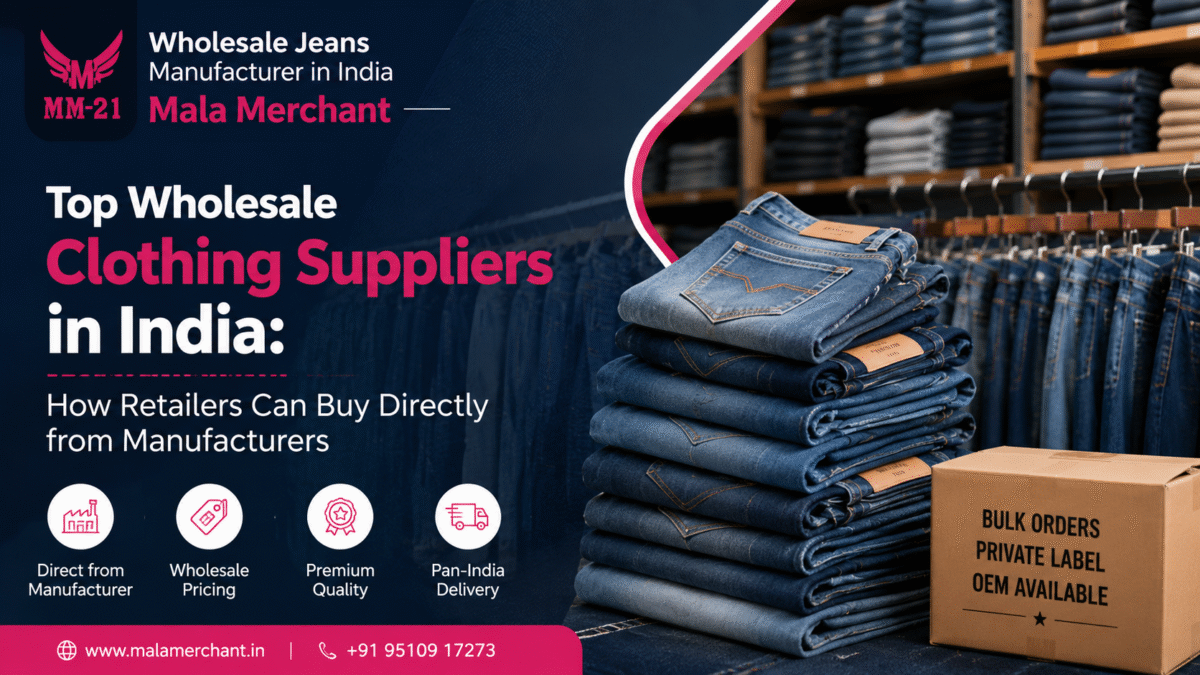
If you run a clothing store, a boutique, or a retail business, the supplier you choose decides your profit margin. Not your price tags. Not your location. Your supplier. Retailers who buy direct from a manufacturer in India consistently stock better, spend less per unit, and scale faster than those who go through middlemen.
This guide breaks down how the wholesale clothing market in India works, what you should check before placing a bulk order, and how to build a long-term sourcing relationship that actually holds up.
Why India Is the Sourcing Hub Every Retailer Should Know
India has been a textile and garment production centre for decades. Cities like Ahmedabad, Surat, Mumbai, and Ludhiana each specialise in different categories. Ahmedabad, in particular, has become one of the most reliable bases for denim and bottom-wear manufacturing.
The reasons retailers across Maharashtra, West Bengal, Rajasthan, and even international markets keep returning to Indian manufacturers:
- Lower per-unit cost compared to buying from local distributors
- Direct customisation on fits, washes, and fabric weights
- Faster restocking when you have a direct factory relationship
- No middleman markup eating into your margin
For any retailer serious about scaling, understanding how to source from wholesale clothing suppliers in India is non-negotiable.
What “Buying Direct from Manufacturer” Actually Means
There is a real difference between a wholesaler and a manufacturer. A wholesaler buys from the factory, adds their margin, and sells to you. A manufacturer makes the product. When you cut out that middleman layer, you get:
- Pricing that is 15 to 35 percent lower on average
- The ability to request specific sizes, fits, or colour runs
- Faster communication when a quality issue comes up
- MOQ (minimum order quantity) flexibility on repeat orders
Buying direct does not mean you need to place enormous orders from day one. Many manufacturers in India, especially in Ahmedabad, work with growing retailers on MOQs that fit where you actually are, not where they wish you were.
Featured Products
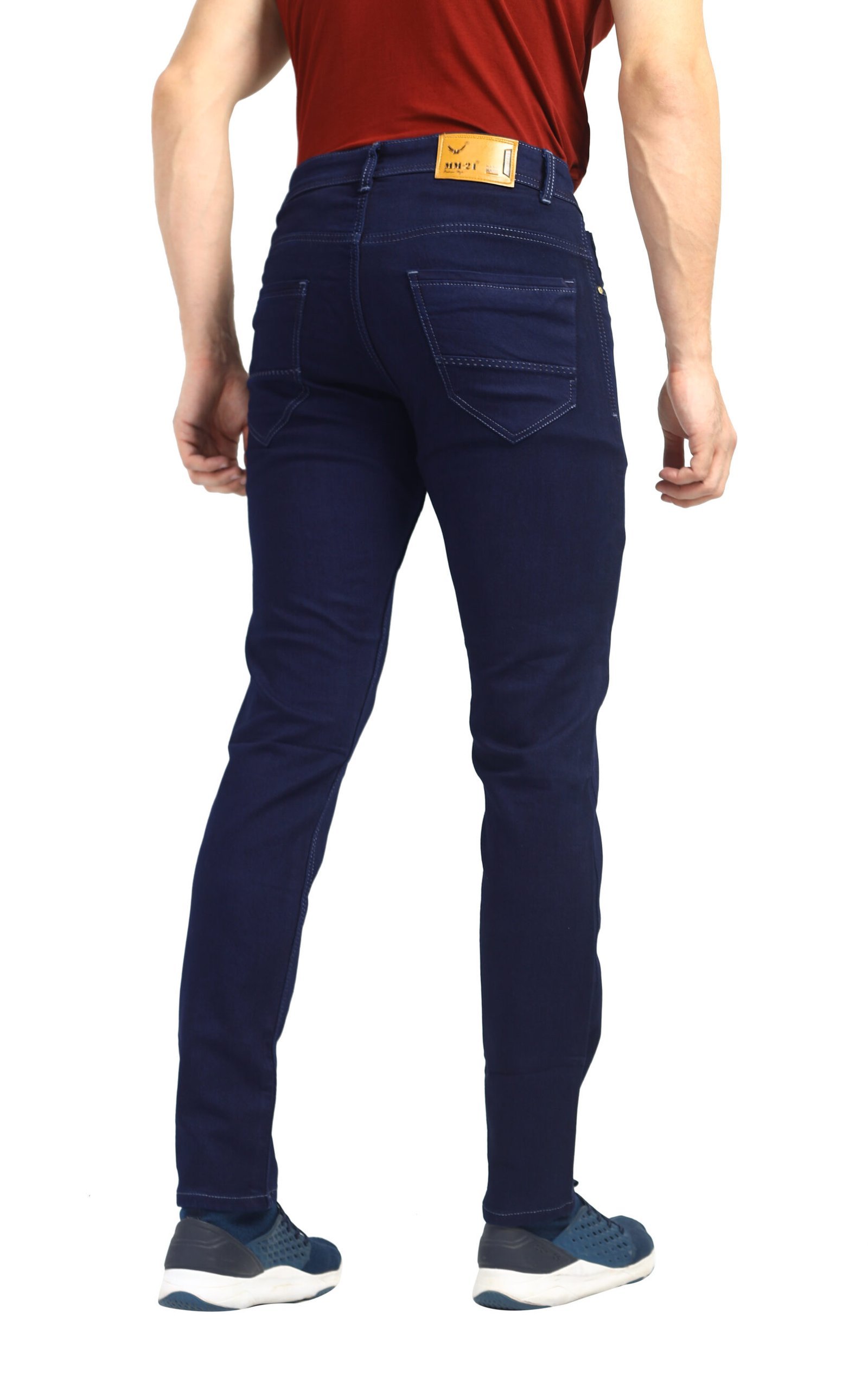
Men’s Basic Regular Fit Denim Jeans
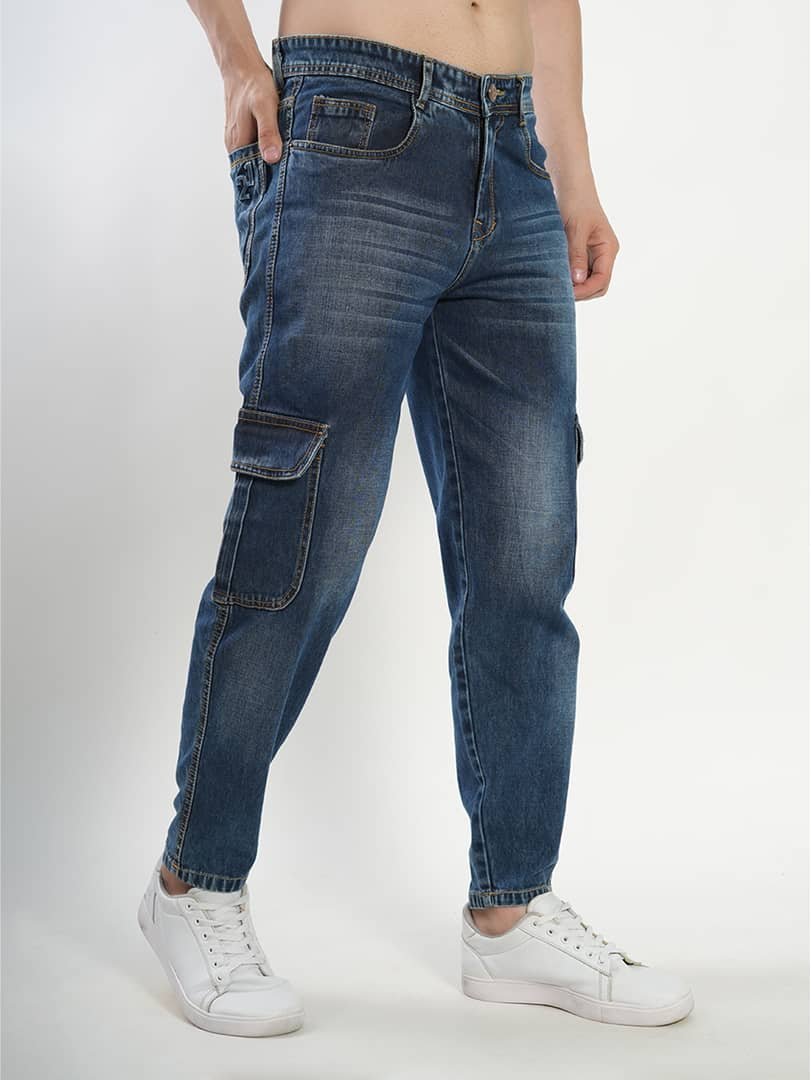
Men’s Loose Fit Denim Cargo Jeans
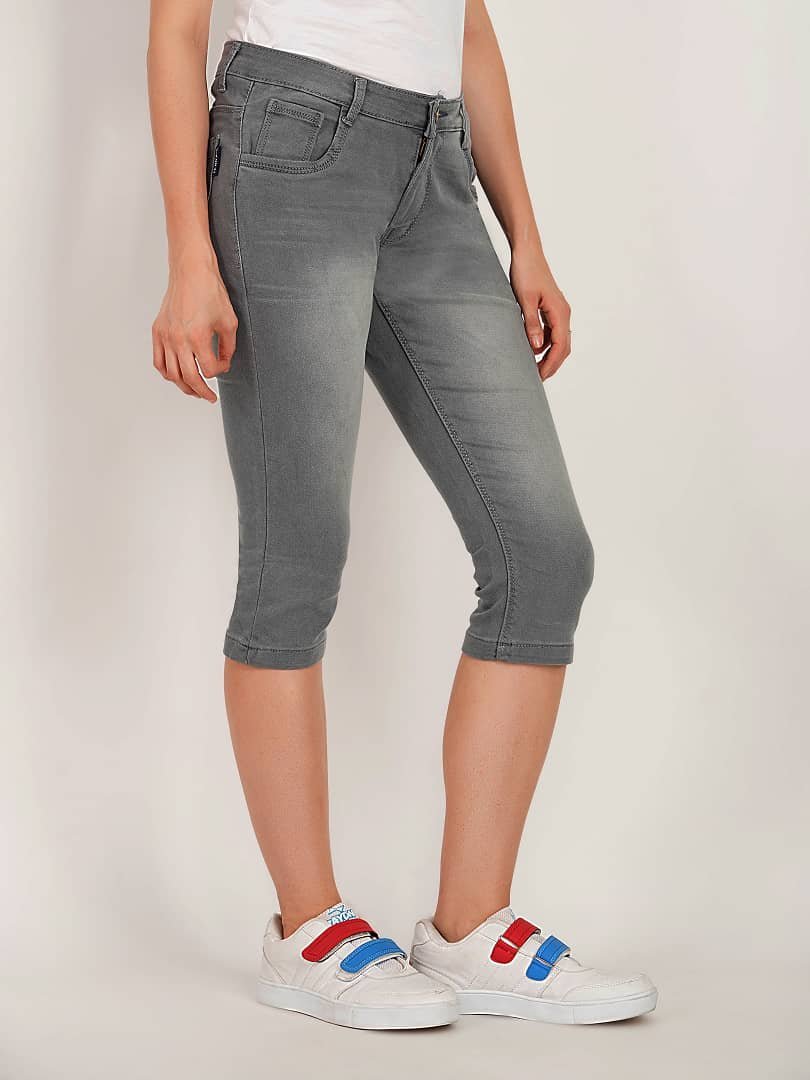
Denim Skinny Fit Capri Jeans for Women
Categories You Can Source Directly in India
India’s garment manufacturing base is wide. Here is what is consistently available for direct purchase:
Men’s Denim and Bottom-Wear
Denim is where Indian manufacturing is hardest to beat on price and quality. From basic regular fit jeans to more fashion-forward cuts like loose fit denim cargo jeans, manufacturers in Ahmedabad produce across a wide range of fits and washes.
If your store caters to men between ages 18 and 40, this segment should be your core sourcing focus. Slim fit, regular fit, cargo-style, distressed, faded — these are not seasonal experiments. They are year-round bestsellers in every retail market across India.
Women’s Denim and Casual Wear
The women’s segment has grown significantly in wholesale demand over the last two years. Retailers stocking jeggings, capris, palazzo pants, and cargo jeans for women are seeing stronger repeat purchases than almost any other category.
Styles like skinny fit capri jeans and women’s cargo jeans work across tier-2 and tier-3 markets just as well as metro retail.
Formal and Semi-Formal Trousers
Beyond denim, Indian manufacturers also supply formal bottom wear. If your store stocks office wear or semi-formal categories, slim-fit formal trousers are a category worth adding to your bulk sourcing list. Formal trousers bought in bulk from a direct manufacturer come at a fraction of the cost compared to distributor pricing.
How to Evaluate Wholesale Clothing Suppliers in India
Not every supplier who calls themselves a manufacturer actually is one. Here is how to verify and evaluate before you commit to an order.
Check If They Own a Production Unit
A real manufacturer has a factory. Ask for photos or a video call walkthrough of the production floor. Ask about the machines they use, the number of workers, and their monthly production capacity. If they cannot answer these questions confidently, they are likely a trading company, not a manufacturer.
Ask About Fabric Sourcing
Where does their denim come from? Reputable manufacturers in India source fabric from certified mills and can tell you GSM (grams per square metre) ratings, stretch percentages, and wash durability. If they cannot speak to fabric quality in any detail, that is a red flag.
Request Samples Before Bulk Orders
No serious retailer places a large order without a sample. Always request a sample of the exact product, exact wash, and exact size you plan to stock. Check stitching quality, zipper durability, waistband elasticity, and colour consistency.
Understand Their MOQ Policy
A supplier with a rigid, very high MOQ is not always the right fit for a growing retailer. Look for manufacturers who offer tiered MOQs — lower quantities for first orders with better pricing unlocked as your order volume grows.
Look for Transparent Pricing
A trustworthy manufacturer gives you a clear price breakdown: fabric cost, stitching, finishing, packaging, and any additional charges for custom labelling or private label. Avoid suppliers who give vague “it depends” answers on pricing without a proper rate card.
The Real Advantage of Sourcing from Ahmedabad
Ahmedabad is not just a city. For wholesale jeans and denim garment sourcing, it is one of the most cost-efficient manufacturing zones in the country. The concentration of denim mills, fabric markets, and garment factories in and around Ahmedabad creates a supply chain efficiency that keeps production costs lower than almost anywhere else in India.
Retailers from Gujarat, Maharashtra, Madhya Pradesh, and Rajasthan regularly source from Ahmedabad because of proximity. But manufacturers here also serve buyers from Kolkata, Delhi, Chennai, and international markets through shipped orders.
The wholesale clothing suppliers in India who operate out of Ahmedabad specifically tend to specialise in denim, cargo, and bottom wear — which means you get depth of product knowledge, not just a generic catalogue. If you want a closer look at why Ahmedabad stands out for denim sourcing, this guide on wholesale jeans manufacturers in Ahmedabad covers it in detail.
What Retailers Often Get Wrong When Sourcing in Bulk
Even experienced buyers make sourcing mistakes that cost them. Here are the most common ones:
Ordering too much variety in one go. When you are testing a new supplier, stick to two or three styles. Do not spread your first order across fifteen SKUs. You will end up with stock that is hard to manage and returns that are hard to negotiate.
Ignoring size distribution. In India, the most commonly sold sizes in jeans for men are 30, 32, and 34. For women, sizes 28 to 34 move fastest in most markets. Ask your supplier what size distribution they recommend based on their other retail clients. A manufacturer who works with hundreds of retailers has data you do not.
Not clarifying lead time upfront. Bulk orders take time. If you need stock for a festive season, plan your order at least 45 to 60 days in advance. Many retailers assume faster turnaround and end up with empty shelves during peak season.
Skipping the reorder conversation. Ask before your first order how reorders are handled. Can you reorder the same style in six weeks? Is the fabric still available? A good manufacturer will give you honest answers on this.
Private Label and Custom Manufacturing Options
If you want to build a brand rather than just retail someone else’s stock, private label manufacturing is the path. Many wholesale clothing manufacturers in India, particularly in Ahmedabad, offer private label services where your brand name goes on the garments.
This includes:
- Custom woven labels and hang tags
- Branded buttons and zippers
- Exclusive colourways not available in their standard range
- Custom packaging
Private label is not just for large brands. Small boutiques with a loyal customer base are increasingly adding their own label to wholesale products to build recognition and justify better retail margins.
How to Start Your First Bulk Order
If you are ready to move from local distributors to direct manufacturer sourcing, here is a practical starting point:
- Shortlist two or three manufacturers based on their product range and your category focus
- Request samples from each
- Compare quality, lead time, and pricing
- Start with a focused first order — one or two styles, three to four sizes
- Evaluate sell-through rate before scaling volume
The manufacturers who are serious about retail partnerships will walk you through this process. Those who push you to place a large order immediately without letting you evaluate samples are not suppliers you want a long-term relationship with.
Ready to place your first bulk order or just want to check pricing before you decide? You can share your bulk order details, and the team will get back to you with product availability, MOQ details, and sample options.
Conclusion
Sourcing direct from wholesale clothing suppliers in India is one of the most effective ways to improve your retail margins without compromising on product quality. The key is knowing what to verify, what questions to ask, and how to build a relationship that works across multiple orders, not just the first one.
India’s garment manufacturing base, especially in cities like Ahmedabad, gives retailers access to a wide range of products at pricing that simply cannot be matched by local distributors. If your store stocks denim, casual wear, or formal trousers for men or women, the sourcing infrastructure is already there. You just need to connect with the right manufacturer.
Mala Merchant works directly with retailers across India, offering bulk pricing, sample availability, and a product range that covers men’s and women’s denim, cargo, trousers, and casual bottom wear. For retailers who want to move from middlemen to direct sourcing, the conversation starts here.
Frequently Asked Questions
Which fabric weight works best for denim jeans in India?
Lightweight 7–10 oz denim works best for warm Indian weather and daily wear. For winter collections, heavier 11–13 oz fabric provides the right warmth and structure.
How can buyers check denim quality before bulk ordering?
Order a sample batch first. Inspect heavy-duty pocket stitching, zipper smoothness, fabric stretch recovery, wash durability, and post-wash shrinkage before finalizing orders.
What is the main difference between stretch and rigid denim?
Rigid denim uses 100% cotton for traditional durability, while stretch denim blends 1–5% elastane for maximum comfort. Stretch fabric fits skinny jeans best, while rigid suits classic straight fits.
Why do some cheap jeans lose color during the first wash?
Poor dye fixing causes rapid color bleeding. Retailers should perform a wet fabric rub test on sample pieces to verify color fastness before placing bulk inventory orders.
What details should you ask a denim manufacturer before buying?
Confirm fabric weight (oz), elastane percentage, stitch count per inch (SPI), wash type, estimated production lead times, and GST billing support before transferring payments.
Ready to Source Wholesale Clothing Directly from Manufacturers?
Get factory-direct pricing on denim, cargos & formal trousers with low MOQs and pan-India shipping.