
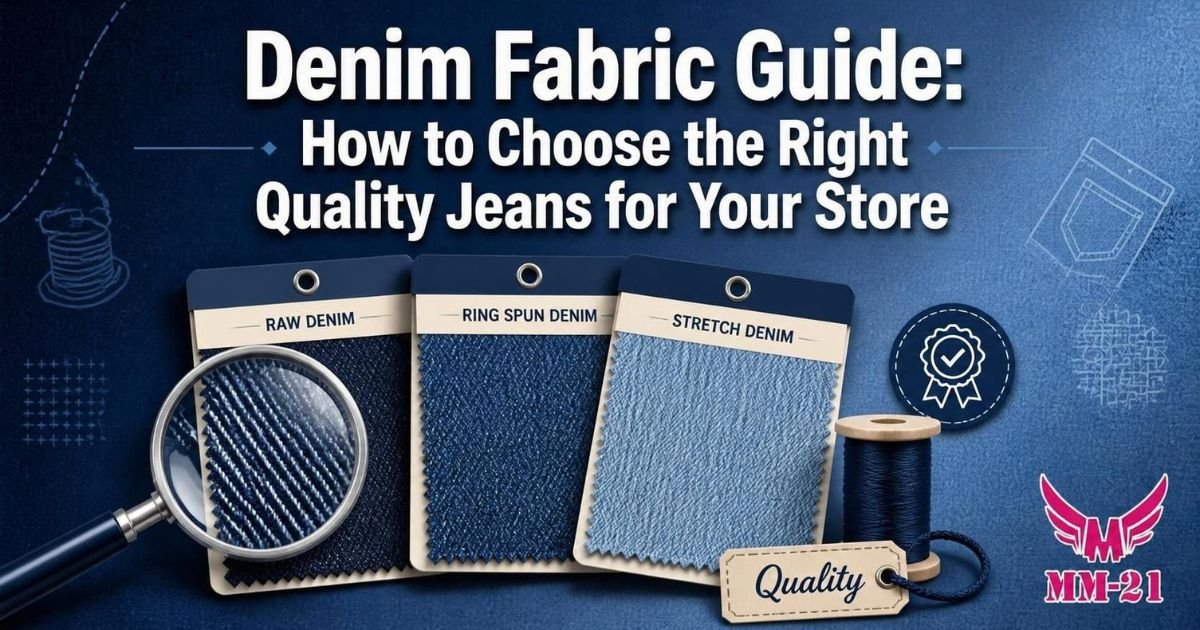
You place a bulk order. The jeans arrive. They look great in the packaging. Your customers buy them. Then, within 2 weeks, the complaints start. Colour fading after one wash. Zipper breaking. Waistband stretching out of shape. Stitching coming loose at the pocket.
Sound familiar?
Most retail losses in the jeans business don’t come from buying the wrong style. They come from buying the wrong fabric and construction quality. And the frustrating part? Most retailers don’t know how to evaluate denim quality before placing an order.
This guide changes that. If you are buying from a denim jeans manufacturer Ahmedabad or sourcing from a wholesale market here is exactly what to look for. Fabric weight, stretch, wash type construction, quality and what works best for the Indian market.
Part 1: Understanding Denim Fabric Weight (OZ)
The single most important number in denim quality is fabric weight, measured in ounces per square yard (oz).
| Weight | Category | Best For |
| 4–6 oz | Lightweight / Summer Denim | Jeggings, summer jeans, women’s slim fit |
| 7–9 oz | Mid-weight | Everyday jeans, joggers, casual styles |
| 10–12 oz | Standard Denim | Classic straight fit, cargo jeans, trousers |
| 13–16 oz | Heavy Denim | Raw denim, premium styles, winter wear |
| 16 oz+ | Selvedge / Raw Denim | Premium/luxury segment only |
What Does This Mean for Indian Retailers?
India’s climate is largely warm and humid for 8–9 months of the year. This means:
- 7–10 oz is the sweet spot for most Indian markets – comfortable year-round
- 4–6 oz works well for women’s jeggings, capris, and summer styles
- 12+ oz is best kept for North India winter stock (October–January)
- Avoid stocking heavy denim in coastal cities like Mumbai, Chennai, and Kolkata
Pro Tip: Always ask your bulk denim jeans supplier for the fabric weight (in oz) before placing an order. A supplier who can’t tell you the weight is a red flag.
Featured Products
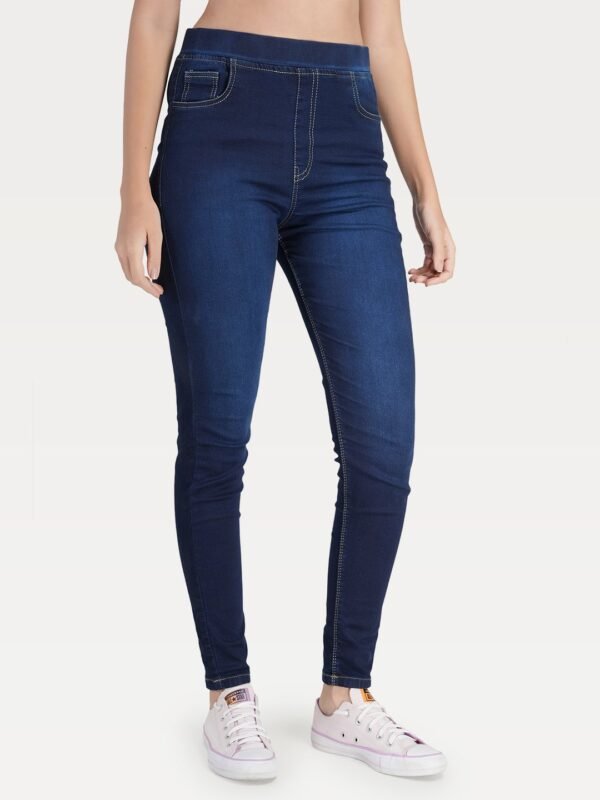
Navy Blue Denim Fix Elastic Skinny Women’s Jeggings
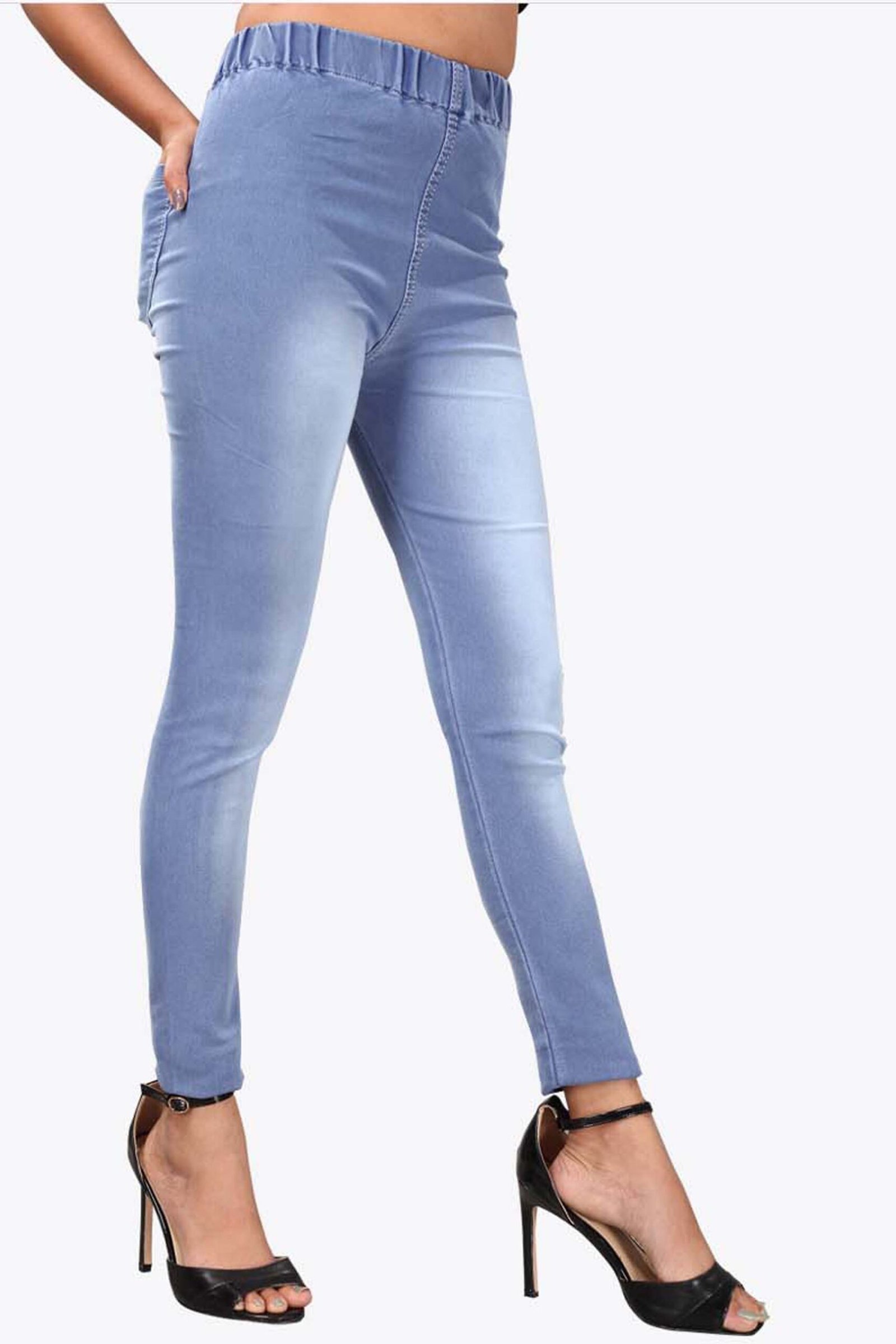
Light Blue Faded Women’s Denim Jeggings
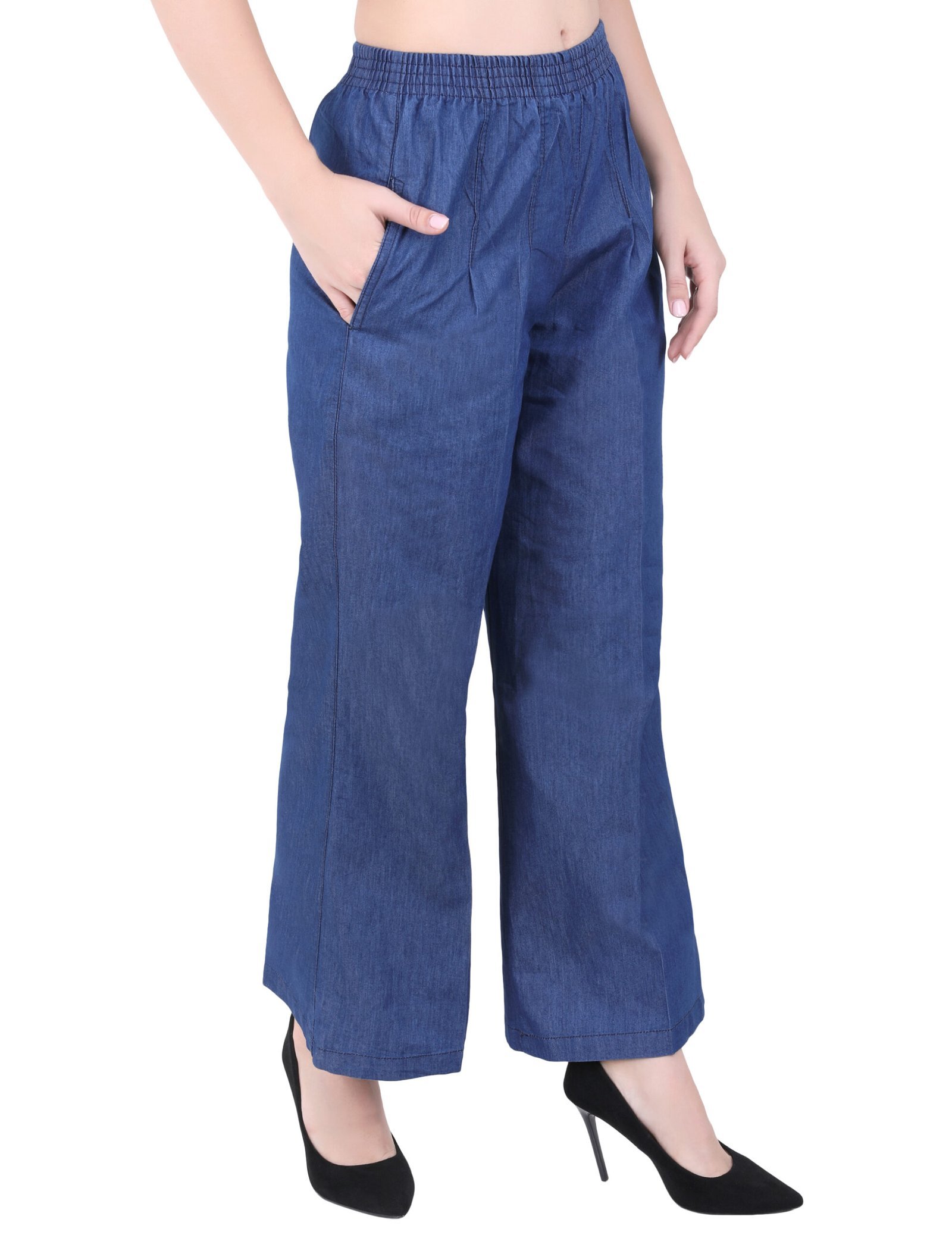
Navy Blue Loose Fit Cotton Denim Women’s Palazzo
Part 2: Stretch vs Non-Stretch Denim — Which Should You Stock?
This is the question every retailer asks. Here’s the honest answer: both, in the right proportions.
Non-Stretch (Rigid) Denim
- Composition: 100% cotton
- Feel: Stiff initially, softens with wear
- Durability: Higher — holds shape longer
- Best for: Classic straight fit, raw denim styles, men’s formal-casual trousers
- Customer segment: Men 30+, buyers who prioritize durability over comfort
Stretch Denim
- Composition: Cotton + 1–3% Elastane (Lycra/Spandex)
- Feel: Flexible and comfortable from day one
- Durability: Slightly lower than rigid – elastane degrades over time
- Best for: Skinny jeans, slim fit, jeggings, women’s jeans, high-waist styles
- Customer segment: Women all ages, younger men, active lifestyle buyers
Super Stretch / Power Stretch Denim
- Composition: Cotton + 3–5% Elastane
- Feel: Almost legging-like flexibility
- Best for: Jeggings, maternity wear, plus-size styles
- Note: Higher elastane equals higher cost but also higher customer satisfaction in comfort-first categories
Stock Ratio Recommendation:
| Denim Type | Men’s Store | Women’s Store | Mixed Store |
| Non-Stretch | 50% | 20% | 35% |
| Stretch (1–3%) | 40% | 50% | 45% |
| Super Stretch (3–5%) | 10% | 30% | 20% |
A good stretch denim jeggings manufacturer will clearly label the elastane percentage on the product. Always check this before bulk ordering
Part 3: Denim Weave Types — What’s Inside the Fabric
Most retailers have never heard of denim weave types — but this affects how the jeans look, feel, and last.
3×1 Twill Weave (Standard Denim)
- The most common denim construction
- Classic diagonal ribbing on the inside
- Balanced durability and comfort
- Used in straight fit, cargo, classic jeans
2×1 Twill Weave (Lighter Denim)
- Thinner, lighter feel
- Less durable but more comfortable in heat
- Used in: summer jeans, lightweight women’s styles
Broken Twill Weave
- Zigzag pattern — reduces “leg twist” (the annoying diagonal pull that happens in regular jeans after multiple washes)
- Higher quality indicator
- Used in: premium stretch jeans, slim-fit styles
Dobby / Textured Weave
- Adds texture and visual interest to the fabric
- Used in: fashion-forward styles, embroidered or patterned jeans
What to Ask Your Manufacturer: “Is this a 3×1 or 2×1 twill?” — a manufacturer who answers confidently knows their product.
Part 4: Denim Wash Types — Understanding the Finish
The “wash” of jeans refers to the finishing treatment applied after weaving. This determines the final colour, texture, and look of the product.
| Wash Type | Look | Best Selling Market |
| Raw / Dry Denim | Dark, untreated, stiff | Premium buyers, enthusiasts |
| Rinse Wash | Clean dark blue, minimal fading | Pan-India, all segments |
| Stone Wash | Soft, faded, casual look | Mass market, Tier 2/3 cities |
| Acid Wash | High contrast, vintage patches | Youth/fashion market |
| Sand Blast / Sand Wash | Uniform light fading | Casual wear, summer |
| Enzyme Wash | Soft texture, slight fade | Comfort-focused buyers |
| Whiskering | Natural-looking creases at thighs | Slim fit, fashion styles |
Wash Recommendations by Market:
Metro Cities (Mumbai, Delhi, Bangalore):
- Mix of rinse wash, whiskering, and acid wash
- Fashion-forward customers want variety
Tier 2 Cities (Ahmedabad, Surat, Jaipur, and Lucknow):
- Stone wash and rinse wash are the safest bets
- Avoid heavy acid wash – too fashion-forward for mainstream buyers
Tier 3 Cities & Towns:
- Rinse wash and stone wash almost exclusively
- Simple, clean looks sell best
Part 5: Construction Quality — What to Check Before Bulk Ordering
Fabric is only half the story. Construction quality determines whether jeans last 6 months or 3 years. Here’s your physical inspection checklist:
1. Stitching Quality
- Check: Stress points — crotch seam, pocket corners, belt loop attachment, zipper base
- Good sign: Tight, even stitching with no loose threads
- Red flag: Skipped stitches, loose thread ends, uneven seam width
2. Stitch Count (SPI — Stitches Per Inch)
- Standard: 10–12 SPI for regular denim
- Premium: 12–14 SPI
- Low quality: Below 8 SPI — jeans will come apart at stress points quickly
- How to check: Count stitches along a 1-inch section of the outseam
3. Zipper Quality
- Brands to look for: YKK, Opti, Riri (in premium)
- Test: Open and close 10 times — it should glide smoothly
- Red flag: Zipper catching fabric, slider moving too loosely
4. Button & Rivet Quality
- Buttons should be riveted, not just sewn
- Rivets at pocket corners indicate higher-quality construction
- Test: Pull the pocket firmly — it should not tear away from the jeans’ body
5. Waistband Construction
- Good quality waistbands use canvas interfacing inside for stiffness
- Test: Fold the waistband — it should spring back to shape, not stay creased
- Stretch waistbands should return to original size after stretching
6. Color Fastness Test
- Wet a white cloth and rub firmly against the inside of the jeans
- Acceptable: Very slight color transfer
- Red flag: Heavy color transfer — the dye will bleed onto the customer’s skin and other clothing after purchase
7. Shrinkage Test
- Wash one sample piece before bulk ordering
- Acceptable: Up to 3% shrinkage
- Red flag: More than 5% shrinkage — your size 32 will become a size 30 after first wash
Part 6: Fit-Specific Fabric Recommendations
Different fits require different fabrics. Here’s what to look for when buying specific styles:
Skinny Jeans
- Needs: 2–4% elastane minimum for wearability
- Fabric weight: 7–9 oz
- Key quality check: Knee area — this is where skinny jeans wear out first
- Source from a reliable skinny jeans manufacturer who uses reinforced knee construction
Straight-Fit Jeans
- Needs: Can be rigid or 1–2% stretch
- Fabric weight: 10–12 oz for durability
- Key quality check: Crotch seam — straight-fit jeans see the most stress here
- Best for volume stocking — buy from a straight-fit jeans manufacturer with consistent sizing
Wide Leg / Baggy Jeans
- Needs: Medium-weight fabric — too light and it won’t drape well
- Fabric weight: 9–11 oz
- Key quality check: Waistband fit — wide-leg buyers are often unhappy if the waist is too tight relative to the leg width
- Source from a wide-leg jeans manufacturer with proper grading across sizes
High-waisted Jeans
- Needs: Good waistband construction — canvas interfacing essential
- Fabric weight: 8–10 oz with stretch preferred
- Key quality check: Back waistband height consistency across sizes
- A reliable high-waist jeans manufacturer will have consistent 11–13 inch rise measurements
Mom-fit jeans
- Needs: Mid-weight fabric with slight stretch for comfort
- Fabric weight: 9–11 oz
- Key quality check: Thigh area — mom fit has extra room here; fabric should not pucker
- Source from a mom-fit jeans manufacturer who understands relaxed-fit grading
Cargo Jeans
- Needs: Heavier, more durable fabric — cargo pockets add stress to the fabric
- Fabric weight: 11–13 oz
- Key quality check: Pocket attachment stitching — this is where cheap cargo jeans fail first
- A good denim cargo jeans manufacturer uses double stitching on all pocket attachments
Part 7: What Works Best in the Indian Climate
India is not one market — it’s 28 different climates. Here’s a quick guide:
| Region | Climate | Recommended Fabric |
| North India (Delhi, Punjab, UP) | Hot summers, cold winters | 7–9 oz summer, 11–13 oz winter |
| West India (Gujarat, Maharashtra, Rajasthan) | Hot and dry | 7–10 oz, light stretch |
| South India (Tamil Nadu, Karnataka, Kerala) | Humid year-round | 6–8 oz, lightweight stretch |
| East India (West Bengal, Odisha) | Hot and humid | 6–8 oz, avoid heavy denim |
| Northeast India | Moderate, rainy | 8–10 oz, moisture-resistant finish |
| Hill Stations / Himachal / Uttarakhand | Cool year-round | 11–14 oz, heavier denim |
Your Pre-Order Quality Checklist
Before confirming any bulk order with a denim jeans manufacturer, go through this checklist:
- [ ] Confirmed fabric weight in oz
- [ ] Confirmed elastane percentage (if stretch)
- [ ] Checked weave type (3×1 or 2×1 twill)
- [ ] Verified wash type matches your market
- [ ] Checked stitching at stress points
- [ ] Counted SPI (minimum 10)
- [ ] Tested zipper open/close 10 times
- [ ] Performed color fastness test
- [ ] Washed one sample — checked for shrinkage
- [ ] Verified size consistency across 3+ pieces
Why Manufacturer Quality Matters More Than Price
The biggest mistake retailers make is choosing the cheapest bulk denim jeans supplier without verifying quality. A ₹50 saving per piece means nothing if 30% of your stock comes back as returns within a month.
The right manufacturer — one who is transparent about fabric specs, consistent in construction, and responsive when there are quality issues — is worth paying slightly more for.
Mala Merchant’s wholesale denim collection is produced with verified fabric weights, quality-tested construction, and consistent sizing. Explore styles including:
- MM-21 Women Denim Loose Fit Cargo — denim cargo with double-stitched pockets
- MM-21 5-Button Knee-Cut Skinny-Fit Women’s Jeans — stretch denim, reinforced knee
- MM-21 8-Button Skinny Fit Women’s Jeans — slim stretch construction
- MM-21 Loose Fit Cotton Denim Women Palazzo — lightweight cotton denim
- MM-21 White Embroidery Knee-Cut Skinny Women’s Jeans — premium detailing, stretch fabric
Frequently Asked Questions
What fabric weight is best for jeans in India?
For most Indian markets, 7–10 oz is ideal — comfortable in warm weather while being durable enough for daily wear. For North India winter stock, 11–13 oz works well.
How do I test denim quality before placing a bulk order?
Request sample pieces and check stitching at stress points, zipper quality, colour fastness (rub test), shrinkage after one wash, and size consistency across multiple pieces.
What is the difference between stretch and non-stretch denim?
Non-stretch denim is 100% cotton — more durable and structured. Stretch denim contains 1–5% elastane — more comfortable and flexible. For women’s jeans and slim fits, stretch is preferred. For men’s classic styles, non-stretch or low stretch (1–2%) works better.
Why do some jeans fade or bleed colour after one wash?
This is a dye quality and colour fastness issue. Always perform a rub test with a wet white cloth on any new sample before bulk ordering. Good quality jeans from a reliable denim jeans manufacturer should have minimal colour transfer.
What should I ask a wholesale jeans manufacturer before ordering?
Ask for fabric weight (oz), elastane percentage, weave type, wash process, SPI (stitches per inch), and whether they provide GST-compliant invoicing. A manufacturer who answers all these confidently is reliable.
Need a Reliable Denim Jeans Manufacturer for Bulk Orders?
Compare fabric, stitching, sizing, and washes. Get factory-direct pricing for bulk denim orders.