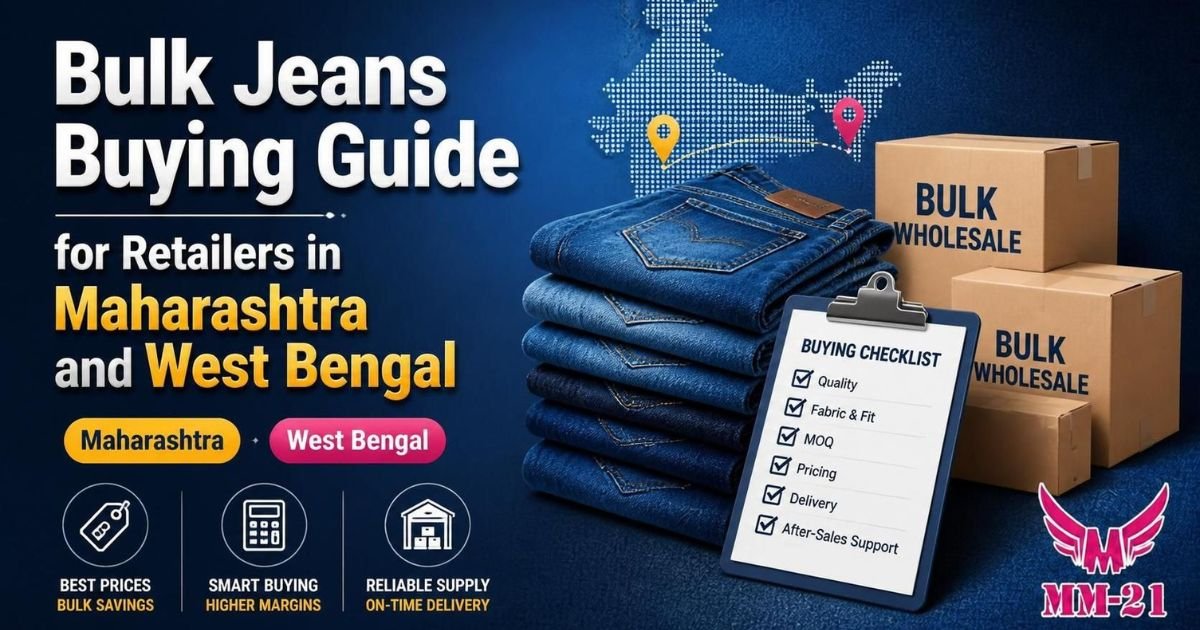
If you run a jeans retail business in Maharashtra or West Bengal, you already know the challenge: the best wholesale jeans prices in India come from Ahmedabad — but sourcing from a city 1,000+ kilometres away feels complicated.
How do you verify quality without visiting in person? How do you handle shipping and returns? What are the minimum order quantities? Is it really worth buying directly from an Ahmedabad manufacturer instead of your local wholesale market?
The answer is yes — and this guide tells you exactly how to do it.
Whether you’re in Mumbai, Pune, Nagpur, Kolkata, or any smaller town in Maharashtra or West Bengal, this is your complete roadmap to sourcing bulk jeans directly from India’s denim manufacturing capital.
Why Retailers in Maharashtra & West Bengal Should Source from Ahmedabad
Most retailers in Maharashtra and West Bengal currently buy from:
- Local wholesale markets (Crawford Market in Mumbai, Metiabruz in Kolkata)
- Regional distributors who add 15–25% on top of manufacturer prices
- Online B2B platforms like IndiaMART (quality inconsistent, MOQ varies)
Here’s what you’re missing by not going direct:
| Sourcing Method | Price Level | Quality Control | Variety |
| Local wholesale market | High (2–3 middlemen) | Low | Limited |
| Regional distributor | Medium-High (1–2 middlemen) | Medium | Medium |
| B2B platform (IndiaMART) | Medium | Inconsistent | High |
| Direct from Ahmedabad manufacturer | Lowest (factory-direct) | High | Highest |
The difference in cost: Buying directly from a wholesale jeans manufacturer and supplier in Ahmedabad, Gujarat, typically saves retailers 25–40% compared to buying through local distributors.
On a ₹1,00,000 monthly stock purchase, that’s ₹25,000–₹40,000 in savings — every single month.
Featured Products
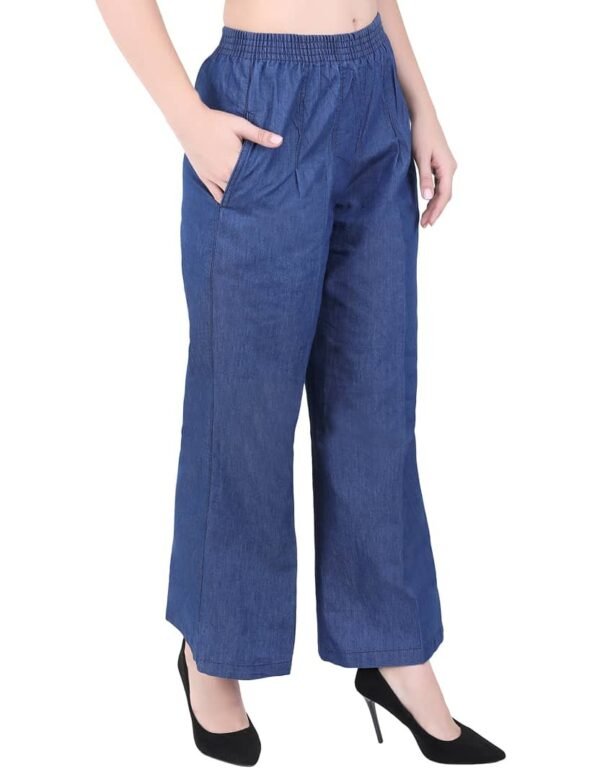
Women’s Embroidery Cut-Work Blue Palazzo
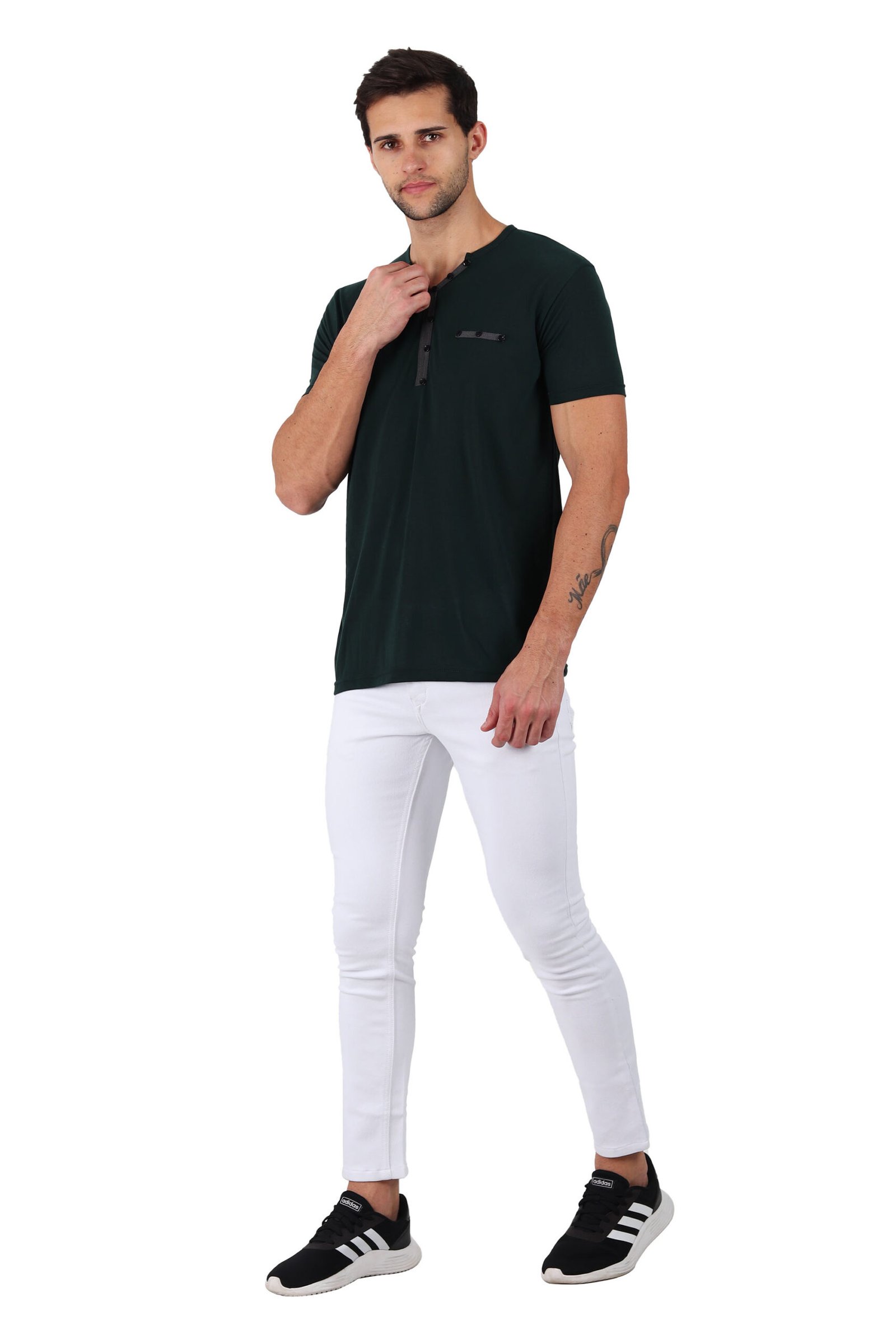
White Basic Jeans for Men
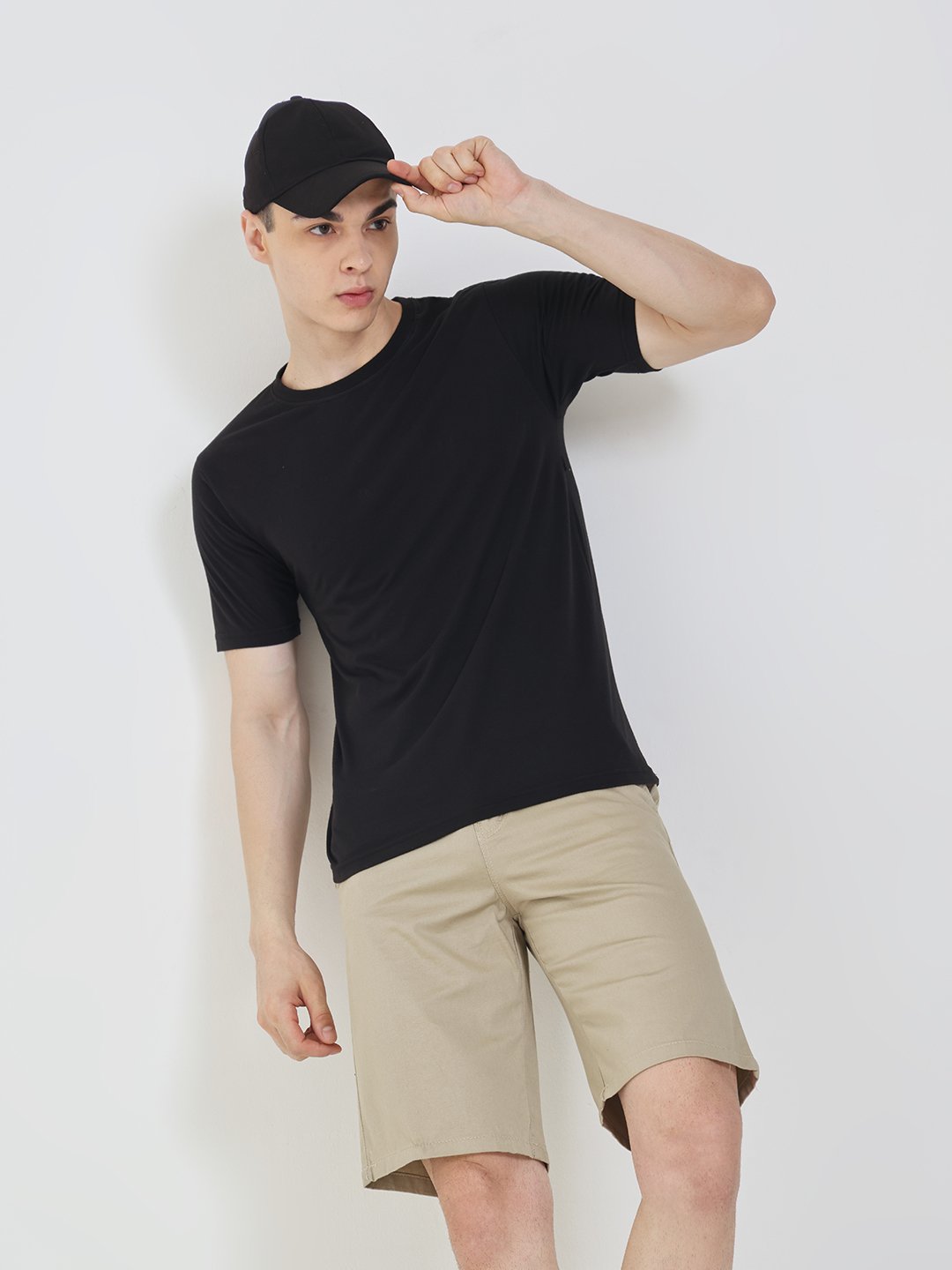
Beige Men’s Regular Fit Cotton Chino Shorts (Casual Wear)
Part 1: Understanding the Maharashtra Jeans Market
Maharashtra is India’s largest state economy — and one of the most diverse jeans markets in the country. Different cities have very different demand patterns.
Mumbai
- Market type: Urban, fashion-forward, price-conscious but quality-aware
- Top-selling styles: Slim fit, skinny, high-waist women’s jeans, cargo for men
- Price range customers accept: ₹400–₹1,200 retail
- Key buying seasons: Pre-festive (August–October), New Year (December–January)
Pune
- Market type: Young population (students + IT professionals), trend-aware
- Top-selling styles: Baggy jeans, joggers, stretch skinny, women’s cargo
- Price range: ₹400–₹1,500 retail
- Key buying seasons: College season (June–July), festive (October–November)
Nagpur
- Market type: Mix of urban and semi-urban, value-conscious
- Top selling styles: Classic straight fit, stone wash, mid-rise women’s jeans
- Price range: ₹300–,₹800 retail
- Key buying seasons: Diwali (October–November), summer (March–April)
Nashik, Aurangabad, Kolhapur (Tier 2 Maharashtra)
- Market type: Traditional retail, function over fashion
- Top-selling styles: Straight-fit men’s, classic women’s jeans, basic stretch
- Price range: ₹250–₹700 retail
- Key buying seasons: Navratri, Diwali, wedding season
What to Stock for Maharashtra Overall:
- Women’s jeans: High demand across all cities — slim fit, skinny, high waist, cargo
- Men’s jeans: Strong straight-fit demand, growing cargo and baggy in metros
- Mix of stretch and non-stretch — lean toward stretch for Mumbai/Pune, more rigid for Nagpur/Nashik
Explore women’s wholesale jeans collection and men’s wholesale jeans collection to find styles that match Maharashtra’s market.
Part 2: Understanding the West Bengal Jeans Market
West Bengal — especially Kolkata — is one of India’s most style-conscious fashion markets, but with a very different sensibility from Mumbai or Delhi.
Kolkata
- Market type: Fashion-aware, strong preference for value + style balance
- Top-selling styles: Slim fit, straight fit, women’s jeggings, capri
- Price range: ₹300–₹1,000 retail
- Key buying seasons: Durga Puja (October) is THE biggest buying season — stock up 2 months early
Howrah, Asansol, Durgapur (Industrial Belt)
- Market type: Working-class and middle-income, practical buyers
- Top-selling styles: Classic straight fit, basic stretch jeans, men’s trousers
- Price range: ₹250–₹600 retail
- Key buying seasons: Durga Puja, Eid (for Muslim-majority areas)
Siliguri & North Bengal
- Market type: Gateway to Northeast India — also supplies retailers in Assam, Meghalaya
- Top-selling styles: Mid-weight straight fit, women’s jeans (slim + straight), men’s cargo
- Price range: ₹300–₹800 retail
- Key buying seasons: Durga Puja, Christmas (significant Christian population nearby)
Climate Consideration for West Bengal:
West Bengal is hot and humid for most of the year — this matters when choosing denim weight.
- Recommended fabric weight: 7–9 oz maximum for most of the year
- Stretch denim is preferred – more comfortable in humid weather
- Avoid stocking 12+ oz heavy denim in bulk — there is very low demand except in winter months
Part 3: How to Source Jeans from Ahmedabad — Step by Step
Here’s exactly how a retailer in Maharashtra or West Bengal can start buying directly from an Ahmedabad-based wholesale jeans supplier in India:
Step 1: Identify Your Requirements
Before contacting any manufacturer, know:
- Which styles do you need? (men’s / women’s / both)
- What quantity? (total pieces per order)
- What price range are you targeting?
- Do you need a GST invoice?
Step 2: Contact the Manufacturer
- Reach out via WhatsApp, phone, or website contact form
- Share your requirements clearly
- Ask for a catalogue with prices and MOQ details
- Request fabric details — weight, stretch percentage, wash type
Step 3: Request Samples
- Always request 5–10 sample pieces before a bulk order
- Most manufacturers ship samples at cost price + shipping
- Test quality thoroughly (refer to our denim fabric quality guide for what to check)
Step 4: Confirm MOQ and Pricing
- Negotiate based on your order volume
- Larger orders = better per-piece pricing
- Confirm: per piece price, GST rate, packaging, and shipping terms
Step 5: Place Your Order
- Confirm payment terms (advance / partial advance / credit for established buyers)
- Share delivery address and preferred courier
- Get a written order confirmation with itemized details
Step 6: Track Shipment & Inspect on Arrival
- Most Ahmedabad manufacturers ship via DTDC, Delhivery, BlueDart, or transport
- Transit time to Maharashtra: 2–4 days
- Transit time to West Bengal: 4–6 days
- Inspect pieces on arrival before signing delivery receipt
Part 4: Shipping from Ahmedabad to Maharashtra & West Bengal
One of the biggest concerns for out-of-state retailers: shipping costs and reliability.
Here’s the reality:
Shipping Costs (Approximate)
| Destination | Weight | Estimated Cost |
| Mumbai | 10 kg | ₹200–₹350 |
| Pune | 10 kg | ₹220–₹380 |
| Nagpur | 10 kg | ₹250–₹400 |
| Kolkata | 10 kg | ₹300–₹500 |
| Siliguri | 10 kg | ₹350–₹550 |
Note: For large bulk orders (50 kg+), surface transport (truck) is significantly cheaper than courier — ask your manufacturer about transport options for bigger orders.
Transit Times
- Ahmedabad → Mumbai/Pune: 2–3 days (courier), 3–4 days (surface)
- Ahmedabad → Nagpur: 3–4 days (courier), 4–5 days (surface)
- Ahmedabad → Kolkata: 4–5 days (courier), 5–7 days (surface)
Tips for Smooth Shipping:
- Always get a tracking number before the manufacturer dispatches
- For large orders, ask for insurance on the shipment
- Confirm if the manufacturer uses trusted couriers (Delhivery, BlueDart, DTDC)
- For regular bulk orders, many manufacturers offer free or subsidized shipping above a certain order value
Part 5: MOQ Guide for Out-of-State Retailers
Minimum Order Quantity (MOQ) is often the biggest barrier for new retailers thinking about sourcing directly from manufacturers.
Here’s a realistic breakdown:
| Supplier Type | MOQ | Suited For |
| Large factory | 500–1000 pieces | Large distributors only |
| Mid-size manufacturer | 100–300 pieces | Established retailers |
| Retail-friendly manufacturer | 24–100 pieces | New and growing retailers |
The good news: Many Ahmedabad manufacturers — including Mala Merchant — offer retailer-friendly MOQs that make direct sourcing accessible even if you’re placing your first out-of-state order.
For a retailer in Pune or Kolkata placing their first order, a 50–100 piece order across 3–5 styles is a practical starting point. This gives you enough variety without over-committing budget.
Contact our wholesale jeans team to discuss MOQ options suited to your business size.
Part 6: GST & Billing — What You Need to Know for Inter-State Purchases
Buying from Gujarat when you’re in Maharashtra or West Bengal involves inter-state GST (IGST) — here’s what you need to know:
GST on Jeans / Denim Garments:
- HSN Code: 6203 (Men’s), 6204 (Women’s)
- GST Rate: 12% on garments priced above ₹1,000 MRP; 5% below ₹1,000 MRP
For Inter-State Purchase (Gujarat → Maharashtra / West Bengal):
- Supplier charges IGST (Integrated GST) on the invoice
- You claim this as Input Tax Credit (ITC) against your output GST
- Net effect: you effectively pay zero GST if you’re a GST-registered retailer
What You Need:
- Your GSTIN (GST Identification Number)
- Supplier’s GSTIN
- Proper tax invoice from the manufacturer
Always buy from a manufacturer who issues proper GST invoices. Unregistered suppliers or those issuing informal bills cannot give you an ITC benefit — and this is a significant financial loss on bulk orders.
Part 7: Building a Seasonal Buying Calendar
Timing your orders right is as important as sourcing right. Here’s a buying calendar tailored for Maharashtra and West Bengal retailers:
Maharashtra Buying Calendar:
| Month | Action | Reason |
| January | Restock summer styles | Pre-summer demand |
| March–April | Buy light denim, women’s jeans | Summer buying peak |
| June–July | Stock up for monsoon + college season | Pune college market |
| August | Place pre-festive bulk order | Navratri, Dussehra prep |
| September–October | Festive season selling | Navratri, Diwali |
| November | Restock for winter | North Maharashtra winter demand |
| December | Year-end sales stock | New Year buying |
West Bengal Buying Calendar:
| Month | Action | Reason |
| January–February | Restock after winter | Post-Puja inventory reset |
| April | Summer stock order | Hot season begins |
| July–August | CRITICAL: Place Durga Puja order | Puja is the biggest season |
| September–October | Durga Puja selling season | Highest sales of the year |
| November | Post-Puja restock | Winter begins, demand continues |
| December | Christmas + New Year stock | Siliguri and North Bengal |
Key Insight for West Bengal Retailers: Durga Puja (October) accounts for 30–40% of annual fashion retail sales in Kolkata. Place your bulk order by mid-August at the latest to ensure stock arrives in time.
Why Mala Merchant is the Right Supplier for Maharashtra & West Bengal Retailers
Mala Merchant is a trusted women’s jeans manufacturer and supplier in India based in Ahmedabad, Gujarat – serving retailers across all states, including Maharashtra and West Bengal.
What makes Mala Merchant the right partner for out-of-state retailers:
- ✅ Factory-direct pricing — no middlemen, no hidden margins
- ✅ Pan-India shipping — reliable courier and transport to all states
- ✅ GST-compliant billing — proper IGST invoices for ITC benefit
- ✅ Retailer-friendly MOQ — suitable for both new and established retailers
- ✅ Wide variety — men’s, women’s, all categories and fits
- ✅ Consistent quality — verified fabric specs and construction standards
- ✅ Responsive support — WhatsApp and call support for order queries
Explore the full wholesale denim collection — or contact our team directly to discuss your requirements.
You can also explore location-specific pages:
Complete Checklist for Maharashtra & West Bengal Retailers
- [ ] Identified your city’s demand pattern (metro vs Tier 2/3)
- [ ] Listed styles needed — men’s, women’s, or both
- [ ] Set your seasonal buying calendar
- [ ] Contacted 2–3 Ahmedabad manufacturers for catalogues and pricing
- [ ] Placed sample order and verified quality
- [ ] Confirmed GST registration for ITC benefit on inter-state purchase
- [ ] Confirmed MOQ and shipping terms
- [ ] Planned order timing — especially for Diwali (Maharashtra) and Durga Puja (West Bengal)
Frequently Asked Questions
What fabric weight is best for jeans in India?
For most Indian markets, 7–10 oz is ideal — comfortable in warm weather while being durable enough for daily wear. For North India winter stock, 11–13 oz works well.
How do I test denim quality before placing a bulk order?
Request sample pieces and check stitching at stress points, zipper quality, colour fastness (rub test), shrinkage after one wash, and size consistency across multiple pieces.
What is the difference between stretch and non-stretch denim?
Non-stretch denim is 100% cotton — more durable and structured. Stretch denim contains 1–5% elastane — more comfortable and flexible. For women’s jeans and slim fits, stretch is preferred. For men’s classic styles, non-stretch or low stretch (1–2%) works better.
Why do some jeans fade or bleed colour after one wash?
This is a dye quality and colour fastness issue. Always perform a rub test with a wet white cloth on any new sample before bulk ordering. Good quality jeans from a reliable denim jeans manufacturer should have minimal colour transfer.
What should I ask a wholesale jeans manufacturer before ordering?
Ask for fabric weight (oz), elastane percentage, weave type, wash process, SPI (stitches per inch), and whether they provide GST-compliant invoicing. A manufacturer who answers all these confidently is reliable.
Ready to Source Jeans Directly from Ahmedabad?
Get factory-direct pricing, low MOQs, and pan-India delivery.